Poodle

Ah... the majestic poodle. The national dog of France, this love-'em-or-hate-'em breed is one of the most recognizable dogs in the world. With its poofy topknot and strategically placed "pompoms," the poodle stands out as one of the top ten most popular dog breeds worldwide, due to its intelligence and hypoallergenic coat. There are three recognized sizes--standard, miniature, and toy--making it versatile and suitable for a variety of environments.
Though closely associated with France, the poodle originated in Germany in the 15th or 16th century. The name is derived from "pudelhund:" pudeln (splash) and hund (dog). It is also connected to "puddle" (German pfütze), which highlights the breed's role as a cold-water retriever.
In France, the poodle is called "caniche," derived from chien canard (duck dog).
No matter where they come from, the name they go by was inspired by their practical purpose of splashing through water to retrieve game.
So, what's up with that fancy haircut?
The poodle’s thick coat had a habit of weighing the animal down in water, making it difficult to reach the game it was trained to retrieve. So, handlers got creative. They needed the dogs to move efficiently—often through cold water—without freezing in the process. By shaving the hindquarters, the poodles were able to swim more easily. The mane protected the chest and lungs, while the pompoms protected the joints and kidneys. The poof on the tail served as a rudder.
The handlers weren't concerned about aesthetics, though. The clip was purely utilitarian, and typically, the dog looked more like this...
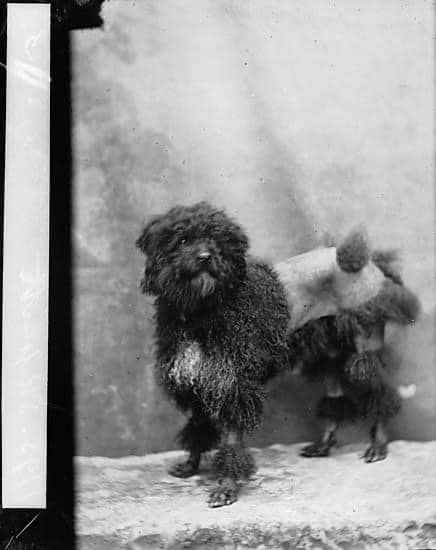
...than the immaculately styled modern trims that developed in the 18th century under the reign of King Louis XVI. Throughout the following two centuries, the trim became more closely associated with the show ring, where breed standards were refined.
Today, poodles are primarily kept as pets, but there are some breeders in Europe and North America that are dedicated to producing hunting-specific lines. Their skills have not diminished, and they remain the eager-to-please pups they always were.
A slightly darker side to the word poodle arose in the early 20th century, when it became slang for a woman. British army officers soon extended the term to men who appeared to be currying favour with wealthy women, referring to them as “poodle-fakers.” The implication was clear: a man acting as a lapdog for personal gain.
Love them, or hate them, poodles have earned a level of respect and devotion that has endured for nearly 600 years. From hunting blinds to king's parlours, from show rings to family homes, the iconic pudelhund continues to thrive--but now with a better haircut.


Comments